

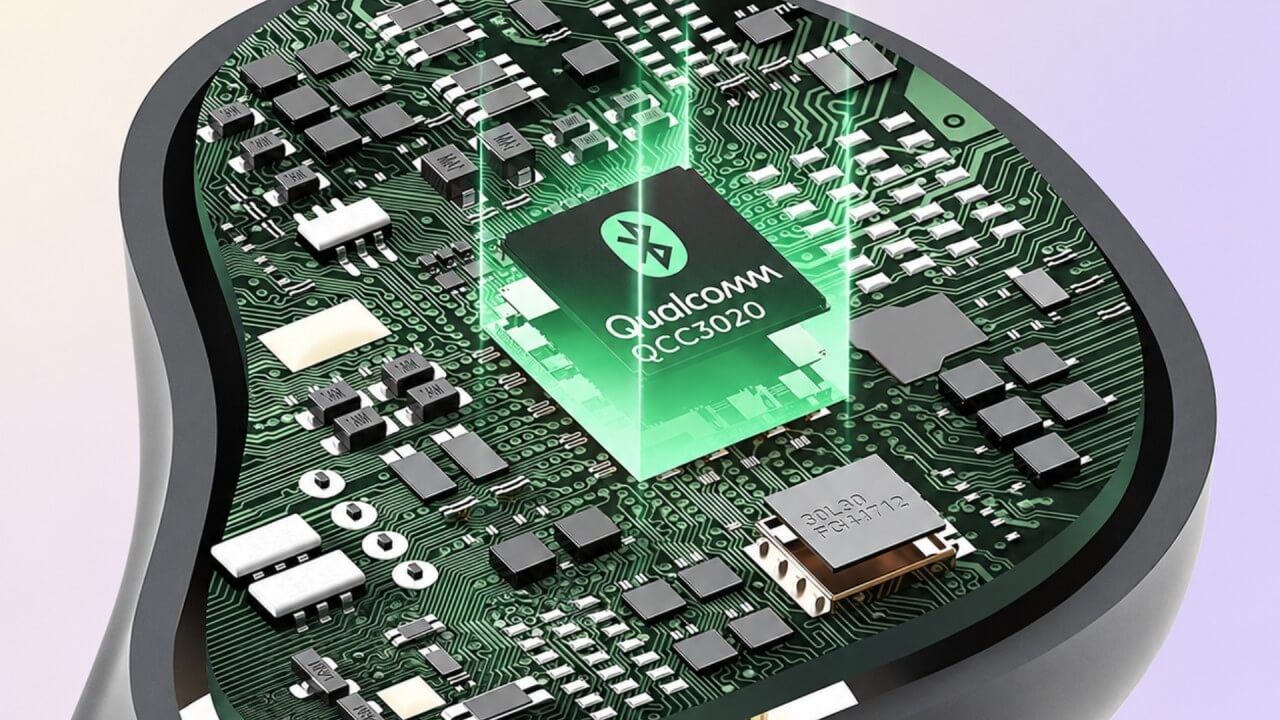
128 GOPS of AI acceleration, support for Wi-Fi 6E across 2.4 GHz, 5 GHz, and 6 GHz, up to 40% lower power consumption in Qualcomm’s Wi-Fi idle test scenario, and a platform footprint up to 30% smaller than the previous generation.
Qualcomm packed a lot of hardware into the new Snapdragon Sound Elite Gen 2, but one much simpler detail interests me most. Wi-Fi now sits directly inside the audio platform that can end up in wireless earbuds.
I have followed wireless earbuds since one of the biggest questions was how often the connection would drop with your phone sitting in your pocket. Since then, we have seen ANC, lossless codec labels, and far more serious audio processing. Wi-Fi has long looked technically possible in earbuds, but the extra hardware made it difficult to fit into such a small device.
Elite Gen 2 is meant to change that part of the story.
What Is Qualcomm, and Why Should You Care If You Just Want Good Earbuds?
If you do not follow chip companies, Qualcomm is probably already inside technology you use without giving it much thought. Its Snapdragon processors have powered Android phones for years, and Snapdragon Sound covers a large part of Qualcomm’s work around Bluetooth audio and audio processing in headphones and earbuds.
I followed Qualcomm mainly through phones for a long time. Fifteen years ago, seeing a Snapdragon name on a spec sheet mostly told me which processor was inside the new HTC, Samsung, or LG phone I was looking at in a catalog. Now the same company is trying to turn a tiny earbud into a much more independent computer.
How Qualcomm Actually Puts Wi-Fi 6E Directly Into Earbuds
Technically, Qualcomm integrates the Wi-Fi 6E radio and related networking functions into the same Snapdragon Sound Elite Gen 2 platform that already handles audio processing and wireless connectivity.
With the earlier XPAN architecture, manufacturers needed a separate micro-power Wi-Fi component alongside the main audio processor. Elite Gen 2 brings those functions together inside the same platform, so supported earbuds can use Bluetooth for normal operation and then move to Wi-Fi when extra range or bandwidth becomes useful.
The platform supports the 2.4 GHz, 5 GHz, and 6 GHz bands. XPAN is designed to allow a seamless move from Bluetooth to Wi-Fi when conditions call for it, without asking the user to manually switch connections every time.
Wi-Fi Earbuds Already Exist, So What Has Qualcomm Actually Changed?

I had to clear up one point first. Qualcomm has not just invented Wi-Fi audio for earbuds.
The company introduced Snapdragon S7 Pro Gen 1 and XPAN, or Expanded Personal Area Network, back in 2023. The idea was for earbuds to use Bluetooth when it was enough, then move to Wi-Fi when the user moved farther away from the phone or when the audio stream needed more bandwidth.
The older platform already supported micro-power Wi-Fi and high-resolution lossless audio.
The difference was how the hardware was physically put together.
On the S7 Pro architecture, the Wi-Fi component was not fully integrated with the main audio processor. Qualcomm’s documentation for the S7 platform shows an audio processor paired with separate micro-power Wi-Fi hardware.
Elite Gen 2 removes that separation, and that matters in a device where every bit of board space competes with the battery and the rest of the audio hardware.
Bluetooth Still Matters Because Qualcomm Is Not Trying to Remove It
Bluetooth is very efficient when your phone and earbuds are close together. For everyday music and calls, that is exactly what you want.
Andrew Laister from Qualcomm explained to SoundGuys that the system can remain on Bluetooth while the connection is strong, then move to Wi-Fi when the situation changes.
Imagine leaving your phone upstairs and walking into the kitchen. The Bluetooth signal has to make its way through floors and walls, but your home Wi-Fi network may already cover both areas. XPAN can use that existing network instead.
Qualcomm therefore positions its XPAN technology around wider coverage throughout a home or building. The idea is not for you to select Wi-Fi manually every time you get up from the couch.
Power Consumption May Still Decide If Wi-Fi Earbuds Succeed
Wi-Fi requires more energy, which is why Qualcomm has focused on a micro-power implementation that can fit the limits of the tiny battery inside an earbud.
Qualcomm reports major efficiency gains for the new platform. In an interview with SoundGuys, Andrew Laister said the company expects roughly 15% to 25% better battery life over Bluetooth than the previous generation, depending on the workload and the final product design.
From years of following wireless earbuds, I have learned that a manufacturer’s battery estimate can look very different once ANC is active or a large part of the day is spent on calls. Wi-Fi adds another mode that will need proper testing under real conditions.
If lossless audio over Wi-Fi cuts several hours from battery life, plenty of buyers will stay with Bluetooth without giving it much thought. If Wi-Fi only takes over when it offers a real benefit and does so efficiently, the trade-off becomes much easier to accept.
What Confused Me While I Was Researching This Topic?
Does Wi-Fi 6E Mean the Earbuds Will Always Use My Home Internet?
No. XPAN can use local Wi-Fi infrastructure for audio transport and wider coverage, while online functions require network access. The earbuds do not need to communicate with internet services all the time simply because they have a Wi-Fi radio.
Will the Earbuds Have to Connect to My Router Like a Phone or Laptop?
Qualcomm has not published enough detail yet about the setup process for future Elite Gen 2 products. XPAN is designed to use existing Wi-Fi infrastructure, but the exact process will depend on the earbud and phone manufacturer.
Can Existing Earbuds Get XPAN Through a Software Update?
Only if their hardware already supports the required Qualcomm Wi-Fi and XPAN architecture. Software cannot add a Wi-Fi radio to earbuds that do not physically contain compatible hardware.