

I have followed phones long enough to remember a time when a color screen was a serious reason to buy a new model. That is why I find it slightly strange that one of Apple’s more interesting ideas now appears to move in the opposite direction.
The company that put a large multi-touch display at the center of the first iPhone in 2007 is now reportedly testing a fitness band with no screen at all.
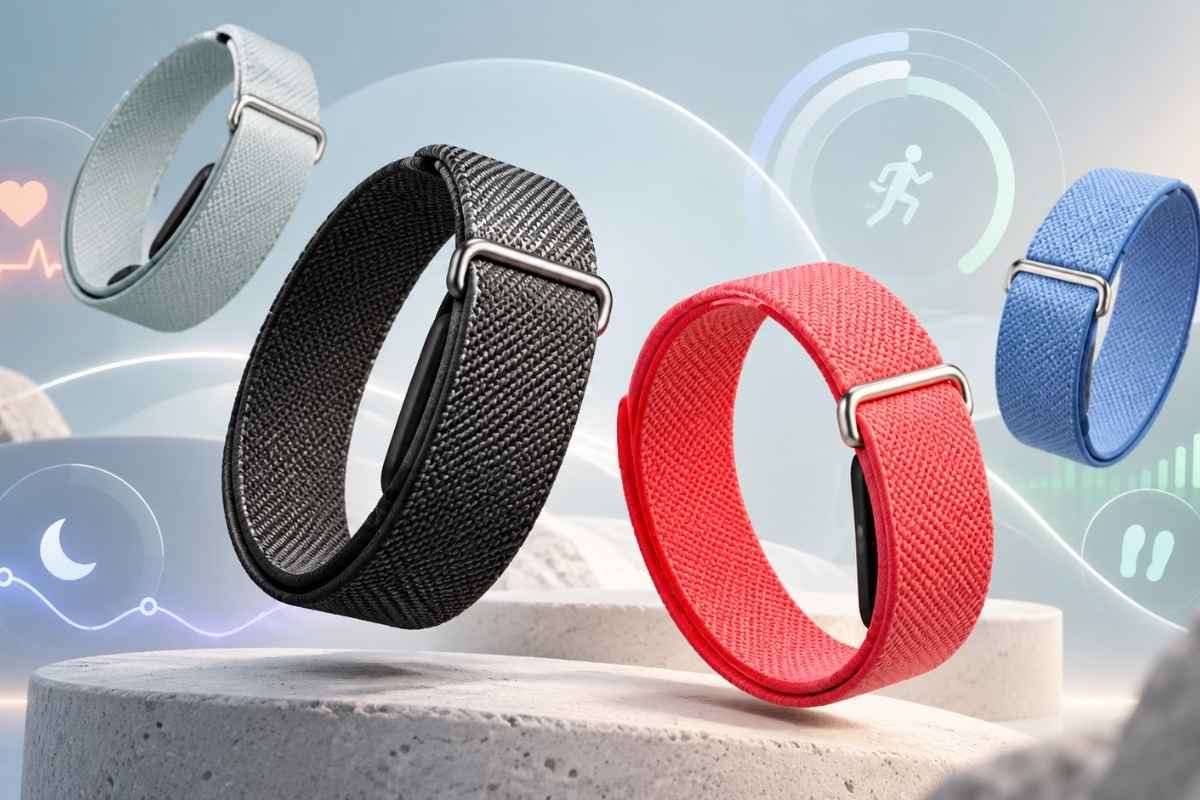
The Apple Screenless Fitness Band currently exists only as a project in development. According to reports citing Bloomberg, Apple has built prototypes with a thin woven band and a sensor module that rests on the wrist. A final decision on the product has not yet been made, and a possible release is not expected before 2028.
If Apple does release such a device, it will enter a segment where Whoop and Garmin already have an advantage, along with a substantial user base.
What Do We Know So Far?
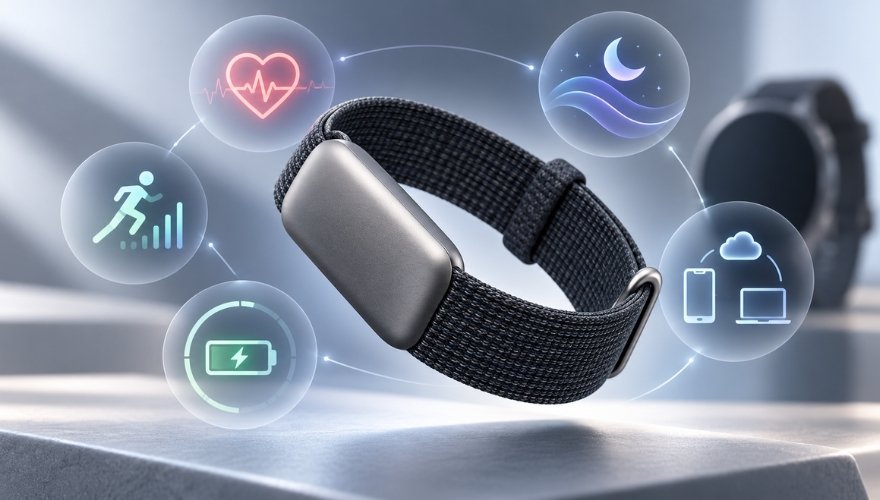
The Apple Screenless Fitness Band is still at the prototype stage, so most important details remain unofficial. Even so, current reports already give us a fairly clear picture of the device and the market Apple could enter.
- Apple is testing a fitness band with no screen, with a thin strap and a sensor module worn directly on the wrist.
- The project does not yet have a confirmed release, so the design, price, and final set of features could change.
- Whoop has already shown that a screenless tracker can work as a standalone product, with continuous tracking and very long battery life.
- Garmin CIRQA has brought that format closer to a wider audience, with a price of $199.99 and no mandatory subscription.
- Apple already has much of the required software foundation through Apple Health, readiness score, and increasingly advanced recovery tracking.
- The main question is therefore not whether Apple can build such a device, but where it would fit alongside the Apple Watch.
How Could Apple Compete With Its Rivals?
Apple’s main advantage would probably not be the hardware itself. Its strongest position comes from the ecosystem that already exists. If the band uses the Health app, readiness score, sleep data, heart rate, and HRV, users could get many of the features that currently drive people toward Whoop.
Apple could also remove the display, extend battery life, and create a device that can stay on the wrist day and night. Whoop remains a serious rival because of its focus on recovery and continuous tracking.
Garmin CIRQA already follows the same core idea. The band has no screen, lasts up to 10 days, and does not require a subscription for standard features. Apple would therefore need to offer at least one clear advantage:
- longer battery life than Garmin CIRQA
- a more comfortable design for sleep
- recovery analysis strong enough to compete with Whoop
- close integration with the iPhone and Health app
Apple Built the Mobile Revolution Around the Screen, So Its Absence Here Is Interesting
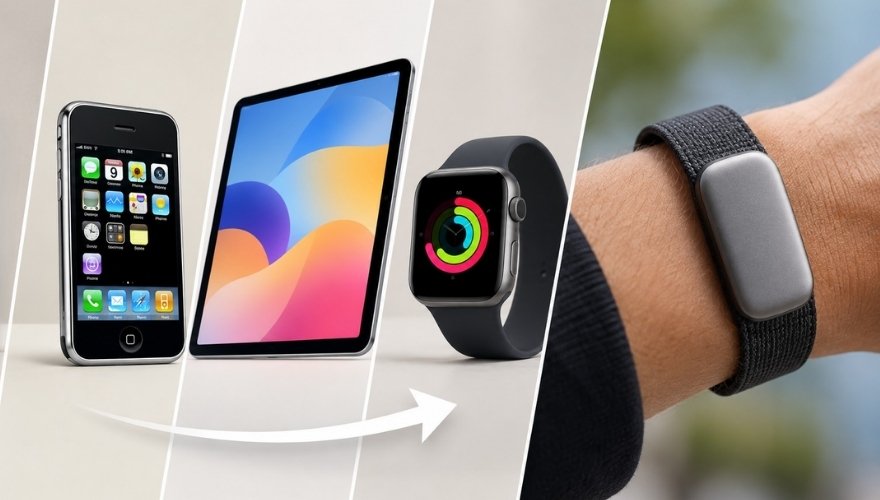
When Steve Jobs introduced the first iPhone in 2007, the touchscreen was not a new idea. More than a decade earlier, the IBM Simon had used a touch-sensitive display instead of traditional buttons.
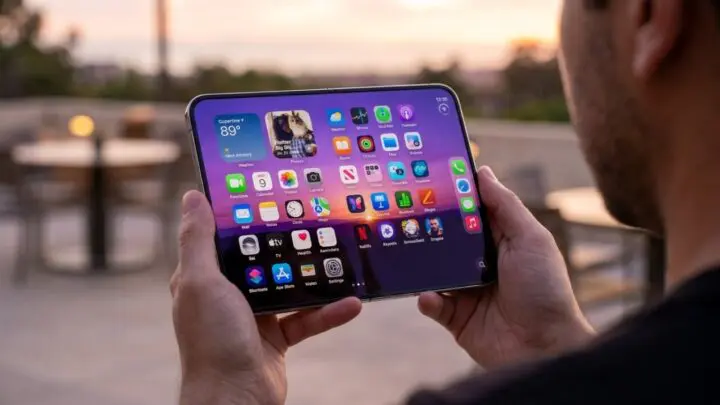
Apple’s change came from the way a large multi-touch display became the phone’s main interface.
The line from Apple’s original iPhone announcement shows how important the screen was to Apple’s idea of a personal device.
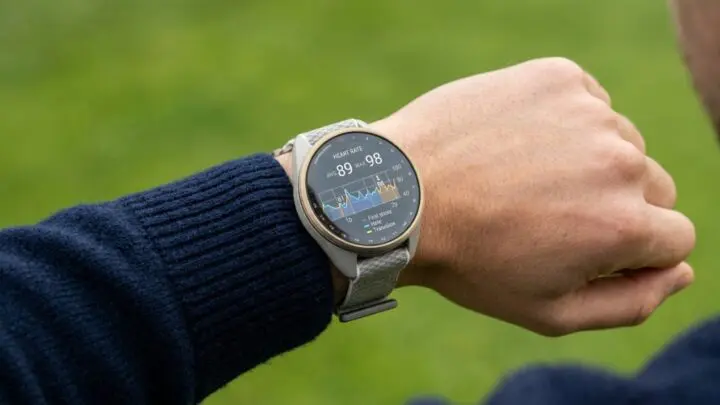
Apple has expanded that idea ever since. The iPad introduced an even larger touch surface, and the Apple Watch moved the display to the wrist.
With each Watch generation, the screen became brighter or more useful, as complications and apps placed even more information just a few centimeters from the hand.
The same focus on wearable technology also raises an important question: beyond displaying information, can a smartwatch actually call for help when its wearer is unable to respond? Features such as emergency SOS and fall detection make that possibility increasingly relevant.
That is why I find a screenless band more interesting than another larger or brighter Apple Watch display.
Where Whoop and Garmin Already Have an Advantage
Apple would enter this segment with a serious gap to close. Whoop already has years of experience with recovery analysis, sleep, and daily strain. Garmin has long battery life, a strong reputation among athletes, and a model with no mandatory subscription.
View this post on Instagram
Apple would therefore need to give users a clear reason to switch. Its biggest opportunity lies in Health app integration, existing Apple data, and a simple device that could stay on the wrist longer than an Apple Watch.
What Is My Conclusion?
From the first iPhone to the Apple Watch, the screen has been one of the main ways Apple separated itself from other devices on the market. A screenless fitness band would turn that idea in a very interesting direction. Apple is now exploring the same territory.
What interests me most is that Apple does not appear to be trying to build another smaller Apple Watch. The idea looks more like an attempt to create a device you could forget you are wearing, even as it continuously collects data in the background.