


A few days ago, I came across an article in Vogue about the new Ray-Ban Meta glasses without a camera.
The headline, I have to say, stopped me and made me read the whole article. Excellent clickbait, Vogue journalists, your editor should give you a raise!
Meta has spent years pushing the camera as one of the main reasons smart glasses should exist at all, and now it has made a model that removes it completely.
If you are wondering what that means for the buyer, the change is bigger than losing one feature. Ray-Ban Meta Audio glasses are lighter, have longer advertised battery life, and cost less than the camera-equipped model, but in return they lose photography, video, and some Meta AI functions that depend on visual context.
After reading the Vogue article, I went to check where I could see them in person. I got a little ahead of myself there. The model has been announced and opened for preorder, but shipments do not begin until October, so the physical comparison will have to wait.
Still, the specifications and what Meta and the media have already published make it fairly clear what the company gained by removing the camera.
The Camera Is Gone, but Meta Has Not Made Ordinary Glasses
View this post on Instagram
Ray-Ban Meta Audio still has speakers, microphones, and access to Meta AI features. You can listen to music, make calls, and use the voice assistant, just without a camera looking in the same direction you are.
On models with a camera, AI can get visual context. You can ask it about an object in front of you or something you see around you because the camera gives the system additional information.
The Audio model does not have that.
At first, I saw them as a weakened version of Ray-Ban Meta glasses. I kept researching and came across The Verge’s article, which changed my perspective. Meta may not even be trying to make a cheaper version of the existing product here. It may be targeting a different audience, people who care more about music, calls, and voice features than the camera.
Removing the Camera Changed the Frame Itself

At first glance, a camera in a smart-glasses device looks like just a small lens that you remove and leave a hole behind. However, it also comes with a sensor, electronics, additional power requirements, and the space all of that takes up inside the frame.
What do you think, why does that matter? Here is the answer! Once that part disappears, the designer gets more freedom.
Ray-Ban Meta Audio weighs around 43 grams and offers up to 12 hours of use. The model with a camera is more expensive and has shorter advertised battery life.
I would not attribute the entire difference to the camera alone, because the devices are designed differently.
Here are some of the frame differences I managed to find online that you may find interesting:
- The Audio model has no camera opening or capture LED. The front of the frame therefore looks cleaner and closer to regular Ray-Ban glasses, especially when viewed from the side.
- The new frame has adjustable temple tips. Meta lists professional-adjustable temple tips, so the end of the temple can be better fitted to the shape of the head.
- Overextension hinges have been added. The hinges can open wider than on a standard rigid frame, which should make them easier to put on and wear for people with wider faces.
- The nose pads are adjustable or replaceable. That is an important change for fit, especially if you wear the glasses all day or use prescription lenses.
No Camera Still Does Not Mean No Sensors
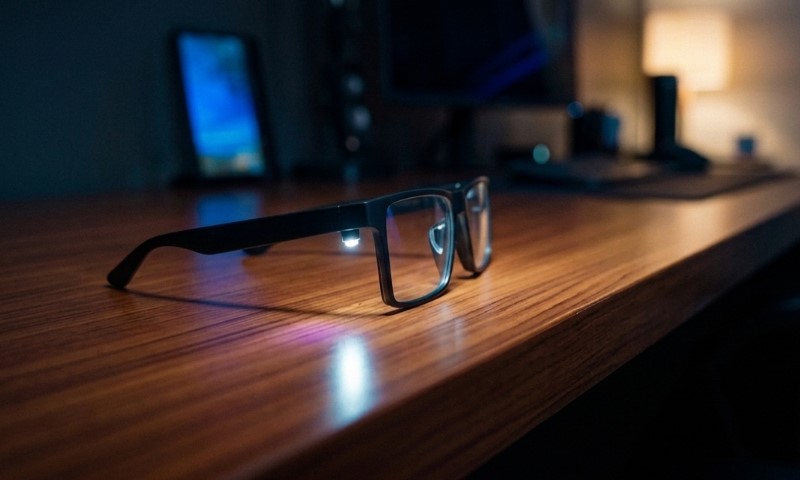
I would be careful with the term “privacy-friendly” here.
The glasses still have microphones because calls, voice commands, and Meta AI would not work without them. The camera has been removed, but the device still collects audio when you use features that require it.
Captain Compliance highlighted that distinction well. Camera-free solves the visual side of the problem, but it does not end the entire privacy discussion. That is why I think it is more accurate to call them glasses without a camera than a private version of Ray-Ban Meta.
Meta Had to Be Seriously Brave to Make Things This Simple
Removing the camera from a product that became recognizable because of it is not a small decision. Meta has effectively given up one of its most attractive features in exchange for a lighter frame, longer battery life, and a product that will probably feel more comfortable to people who dislike having a camera on someone else’s face.
Moves like that can easily look like a step backward until we see how buyers respond. But if Ray-Ban Meta Audio manages to attract people who have avoided smart glasses precisely because of the camera, it will turn out that Meta judged the risk well.
Still, companies this large can sometimes afford to take risks and play with the creativity of their models.
In the end, fortune often favors the bold.
For the Very End!
Ray-Ban Meta Audio are lighter, cheaper, and have longer advertised battery life. At the same time, they lose one of the strongest reasons for AI in glasses to be different from AI on a phone or in earbuds.
That is a serious compromise.
But perhaps that compromise is exactly what the smart-glasses category was missing.
When the Audio model reaches regular retail, the first two things I would want to check are much more ordinary than any AI feature: what 43 grams feel like after several hours and how different the frame really feels from regular Ray-Ban glasses.
Maybe that will be exactly the reason more people are willing to wear them at all.