

I have to admit that a golf watch, ECG, and LED flashlight are not three things I would have expected in the same product a few years ago. A golf watch always sounded like a very specialized device to me: it shows the distance to the green, records the score, and helps with the next shot. Garmin is now seriously pushing that boundary.
The new Garmin Approach S72 costs $799.99, comes in 43mm and 47mm sizes, and combines an AMOLED display with an ECG app, built-in LED flashlight, and 64GB of storage. The larger model lasts up to 16 days in smartwatch mode and up to 20 hours during golf activities. Garmin presents it as its new flagship golf smartwatch, while global sales begin during October.
What I find interesting here is how much the idea of a specialized sports watch has changed. The Approach S72 still exists because of golf, but Garmin now expects you to wear it even when the golf clubs stay at home.
Before we get into the details, here is exactly what you get:
- 43mm or 47mm case with an AMOLED display
• 64GB of storage, four times more than the S70
• ECG app in markets where it has regulatory approval
• LED flashlight with white and red light
• Titanium bezel and sapphire crystal
• Microphone and speaker for calls and voice features
• up to 16 days of battery life on the 47mm model
• more than 43,000 preloaded golf courses
On paper, it already looks more like a serious premium Garmin.
Golf is still the reason the S72 exists
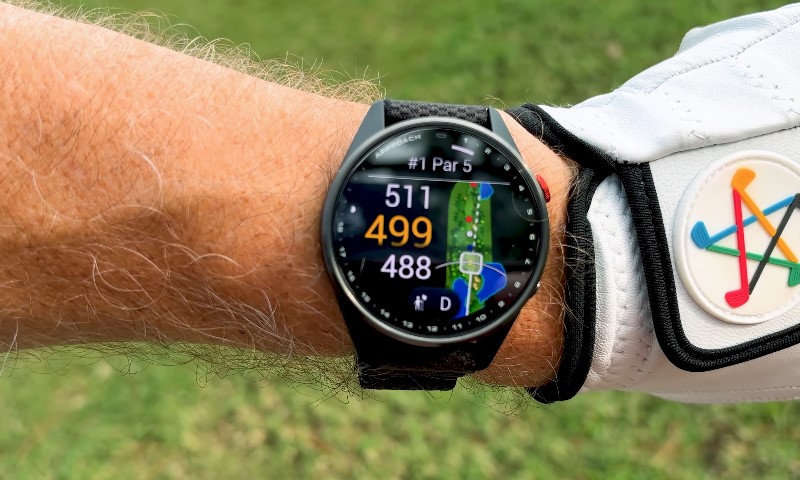
Garmin has kept the watch focused on its main purpose.
The Approach S72 includes more than 43,000 preloaded courses, shows distances to the green and hazards, while PlaysLike Distance adjusts the distance based on elevation changes and other conditions. Virtual Caddie uses data from your previous rounds to help with club selection.
The new generation also adds more data about the swing itself.
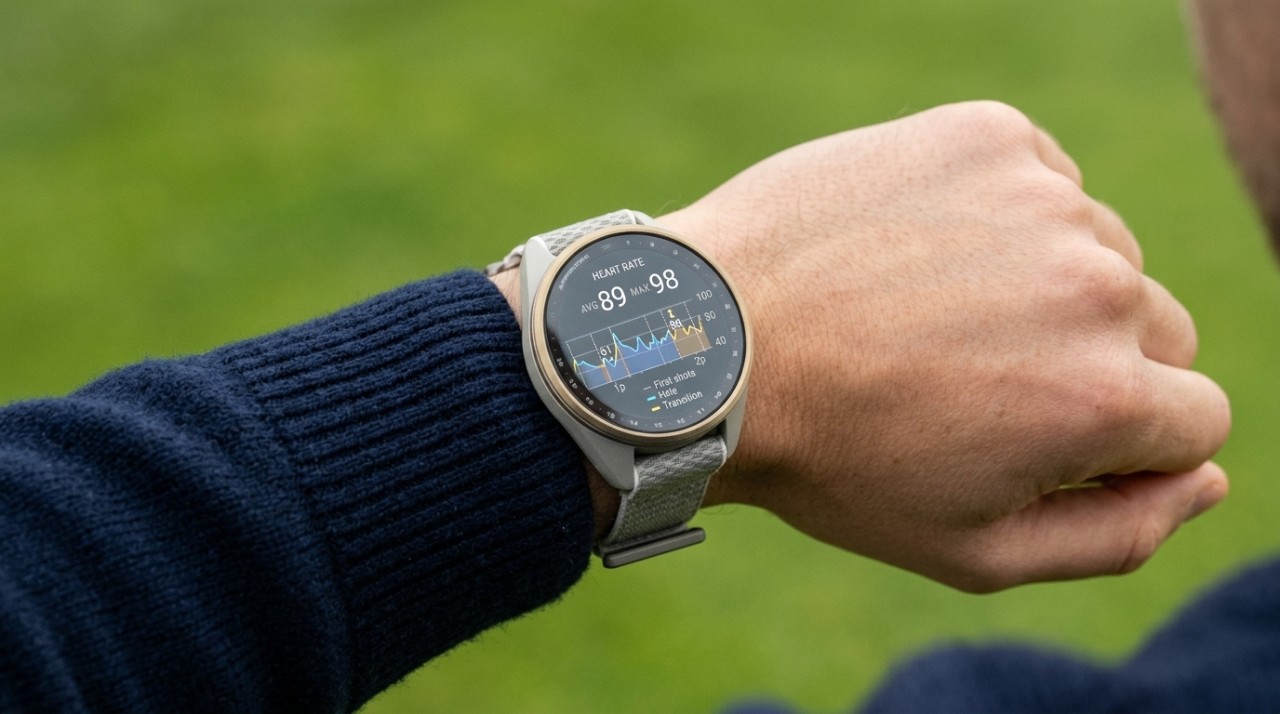
The watch can track hand speed, tempo, and backswing length, giving golfers measurable data instead of relying entirely on feel. Garmin has also added biometric data around each shot, including changes in heart rate before and after the shot.
I like that part.
If your heart rate regularly jumps before a difficult shot or at a certain point in the round, you now have a data point you can connect with the result. For someone who likes devices, measurements like that justify the existence of a sports watch more than another good-looking watch face.
The S72 is also the first model in the Approach line to add a microphone and speaker. When connected to a compatible phone, you can make calls through the watch, and Garmin has also added voice controls.
ECG is the reason I would keep wearing it after the last hole
View this post on Instagram
Here, the Approach S72 starts moving beyond the boundaries of a golf device.
The Garmin ECG App records the electrical activity of the heart in a way that corresponds to a Lead I ECG reading and can indicate a possible pattern of atrial fibrillation or normal sinus rhythm. Availability depends on regulatory approval in each country, and the feature is intended for users age 22 and older.
It is important to set the right expectations. An ECG on your wrist is not a replacement for a medical examination, and Garmin does not present its health features as tools for diagnosing every heart condition.
The S72 also tracks heart rate, stress, and Body Battery throughout the day. It includes advanced sleep tracking, Pulse Ox, and skin temperature. When you sit still for two minutes, the watch can create a snapshot of your average heart rate, stress level, and respiration.
Four times more storage and 16 days of battery life
The S72 has 64GB of internal storage. The Approach S70 had 16GB.
That increase gives you more room for maps, music, and data stored locally on the watch. On a device that costs nearly $800, 64GB fits the rest of the hardware much better.
The two sizes have different AMOLED displays. The 43mm model uses a resolution of 416 x 416 pixels, while the larger 47mm version goes up to 454 x 454 pixels.
Garmin has added a titanium bezel and sapphire crystal, which I especially appreciate on a sports watch that will hit a golf bag, a table, and everything else you forget about while wearing it.
Then we get to the battery.
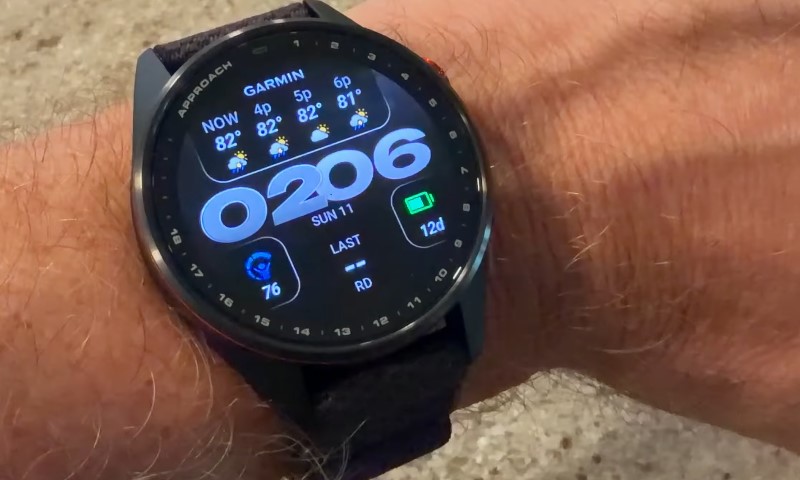
Garmin rates it for up to 16 days in smartwatch mode and up to 20 hours during golf activities with GPS.
On the larger model, that is the maximum claimed battery life, while more frequent use of GPS, the always-on display, Pulse Ox measurements, and other sensors will shorten the time between charges.
It uses a rechargeable lithium-ion battery, and the longer battery life matters because the watch tracks data throughout the day and night. The less often you take it off to charge, the fewer interruptions you have in heart rate, sleep, and recovery tracking.
For golf, the second number matters. Up to 20 hours of GPS use means one full charge can easily cover multiple rounds, even with active location tracking throughout the entire game.
The LED flashlight sounds funny until you need it once
When I first saw an LED flashlight on the specification list, I thought we had reached the stage where manufacturers have to add something else just to make the new generation look different.
Then I thought about how often I use the flashlight on my phone.
Garmin’s flashlight has multiple levels of white light and a red light. The watch also supports strobe options.
On the golf course, you can light up your bag or equipment when you start early in the morning. Away from the course, you will probably find even more situations for it, from finding your keys to walking through a dark room without a phone in your hand. Since the light is already on your wrist, both hands remain free.
Is all of that enough for $799?
If golf takes up only a few weekends of your year, I would look at a cheaper Garmin.
The Approach S72 is much easier to justify for someone who plays regularly, uses golf analytics, and wants the same device for everyday health, training, and sleep tracking.
I am especially interested in the direction Garmin is taking.
A few years ago, I would have expected ECG on a mainstream health watch. A golf model would have stayed focused on GPS, the course, and the score, and now one device does both.
As someone who follows wearables, it feels like a natural next step for the category. If you are already wearing an expensive sports watch for several hours of play, Garmin wants to give you enough reasons to keep it on your wrist for the next 20 hours.