

I already mentioned that I grew up without a phone in my pocket. I know that today’s needs are different and that a phone often solves very real problems, from arranging transportation to calling parents after school. I sometimes realize that I have become a slave to the screen myself and that I check my phone much more often than I actually need to.
What I still have a hard time accepting is a child in a shopping mall eating with a phone turned on in front of the plate. I do not have children, so I have no intention of giving lessons to parents who make decisions every day that I have not had to face yet. Still, I came across data showing that more than four in 10 parents felt pressured to buy their child a phone earlier than they wanted to.
Let’s see what the reasons are, but also spend a little more time on this topic!
Safety is always the most important reason!

If a child walks home from school or practice alone, I understand why a parent wants to be able to call them right away. 90% of parents listed safety and emergencies as the main reason for allowing their child to have a phone.
I do not have much doubt about that.
If I were a parent and my child traveled home alone every day, I would probably want the same thing. The problem is that today’s first phone is usually not a device used only for calls and messages. It is a camera, browser, and apps in one device.
That is where the real problem starts. Children’s online safety is an especially sensitive topic, and I would say it is also the biggest concern for parents. But more about that in another blog.
Then comes the sentence I would least like to hear

“Everyone in the class already has a phone.”
As an adult, you can say that you do not care what other people do, but a child sees it very differently. If plans, messages, and group chats all happen through the phone, then the device starts to have a social role too.
And that is why the data in the headline feels completely realistic to me.
You may decide that the first smartphone will come at age 13, and then at 10 or 11 the questions start.
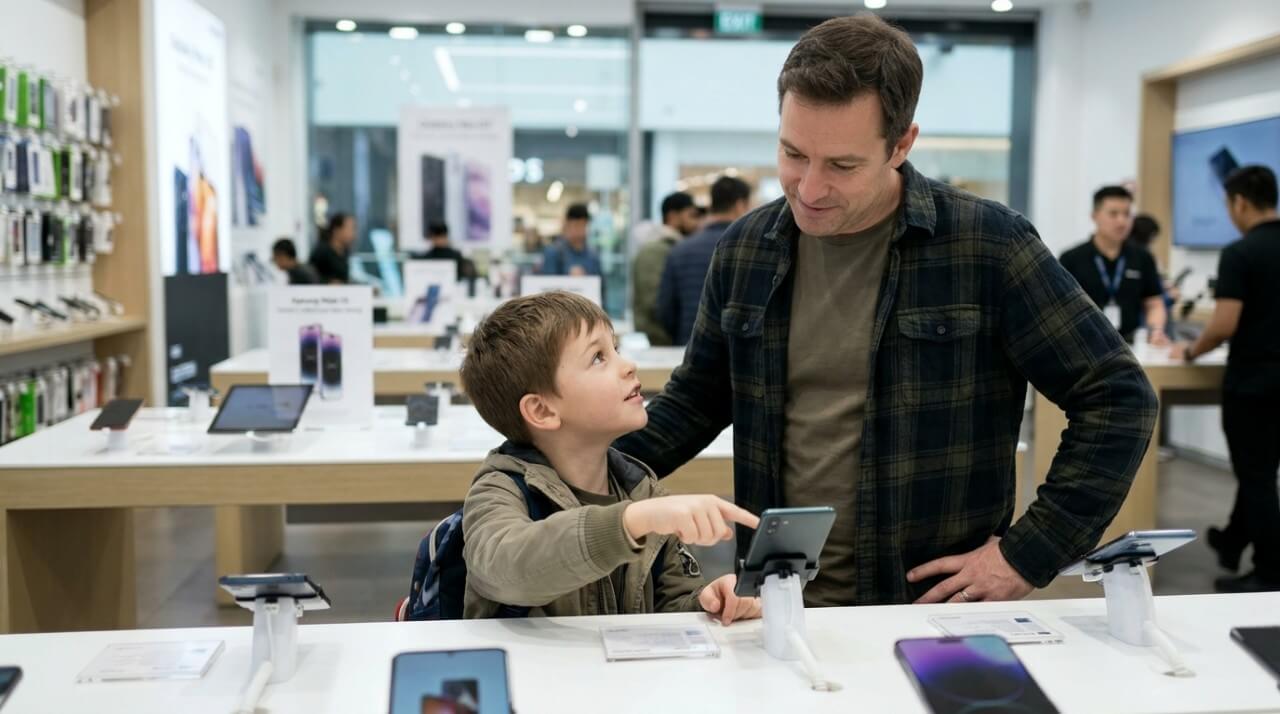
After some time, you begin negotiating with your own rule. I can imagine what that looks like. Even worse, the child probably will not come asking for just any phone. They will come asking for a specific model, because someone in their group already has exactly that one.
What is the alternative to a cell phone?
If my main goal were staying in contact with a child, I would first look at a device that solves exactly that problem. Calls, messages, location if needed.
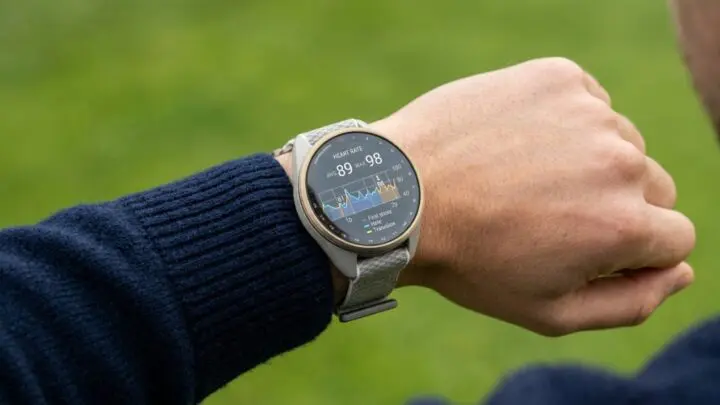
A smartwatch makes more sense to me than a full smartphone for a child who is only starting to go to school or practice alone. I say “would” because it is easy to have a perfect plan when you do not have a child who comes home every day with a new argument for why they need a phone right now.
What bothers me most is when the phone becomes the default part of every moment
It is annoying when the device becomes necessary even when nothing special is happening.
Waiting for food, phone.
Lunch arrives, and the phone is still sitting in front of the plate.
It happens to me too that I open my phone just to check one thing, and five minutes later I no longer even know why I picked it up.
I understand safety. I understand staying in contact with a child. I can even understand the pressure when all their friends already have a smartphone. A phone turned on in front of the plate is still hard for me to accept.
And since I already admitted that I look at the screen too often myself, it would probably be fair for me to put mine away from the table first.